
Donations for the Tokyo Marathon 2027 Charity and the Recruitment of Charity Runners Are Beginning!
2026.06.22 国境なき子どもたち
Hello. This is KnK(Children Without Borders)
Starting this month, June 24th, we will begin accepting donations and applications for Charity Runners for the Tokyo Marathon 2027 Charity.
Donations will be used to provide educational opportunities and safe and secure places for children in Cambodia, the Philippines, and Bangladesh. Please apply!
Application details from here↓
https://knk-int.org/news/ev270307/
Also, this time we’ll report on our recent activities in Bangladesh, which is a charity recipient for both the Tokyo Legacy Half Marathon 2026 Charity and the Tokyo Marathon 2027 Charity.
[Bangladesh] What We Care About to Build Relationships with Street Kids
Bangladesh Activity News - Overseas Activities 2026.06.04
Report: Public Relations Officer - Akane Okada
We, KnK (Children without Borders), value building relationships with children, who are the focus of our work, beyond differences in position such as "beneficiaries and supporters" or "children and adults." In this article, six staff members from the Hohoemi Drop-in Center (DIC/ Tarikul, Chondon, Biplob, Farzana, Shamima, and Jasmine) share what they consider important in building relationships with children living on the streets. We hope you enjoy reading until the end.
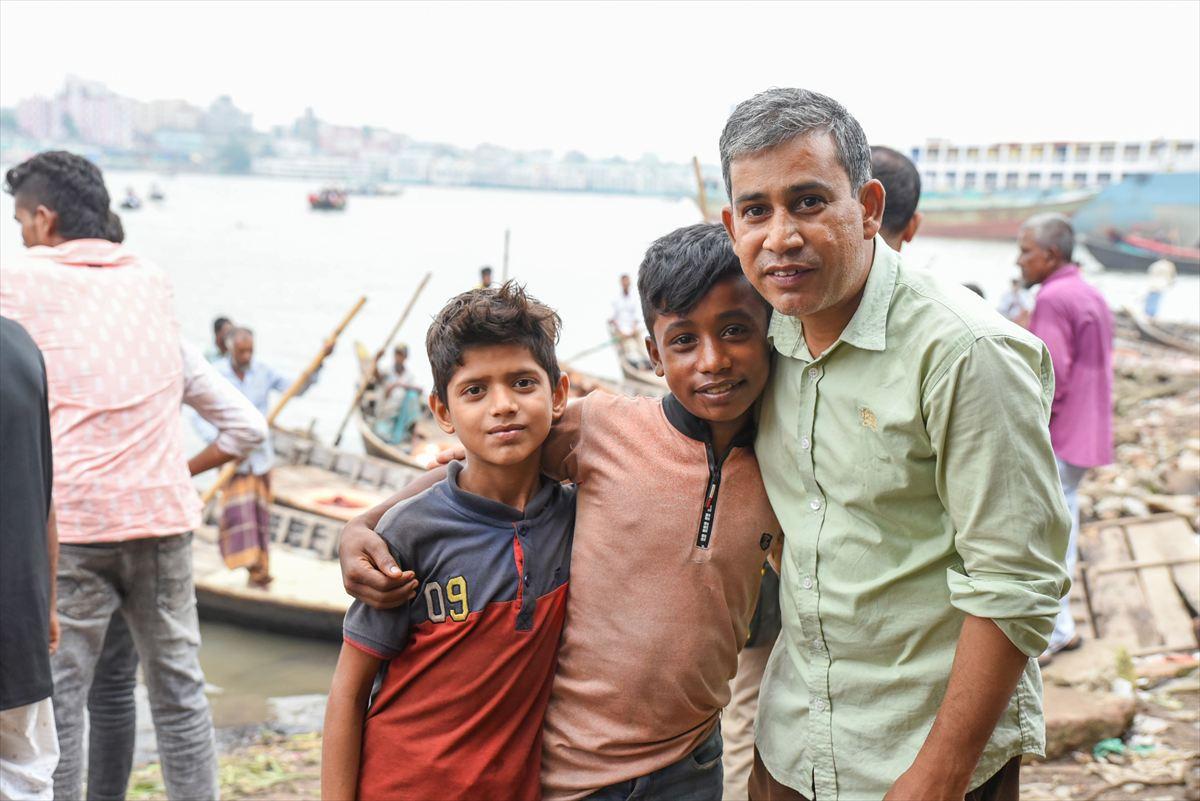
At Sadar Ghat Port where the children live. The center director Tarikul with the kids (photo taken in 2023)
First, let's hear from the children who have agreed to be interviewed so far.
● “I love the staff because they treat me not as a ‘street child’ but as a ‘child of the home (center),’ like a member of their family.” (Tanvil / 12 years old)
*The ages listed below are as of the time of the interview.
● “I’m happy that the center staff never scold or use dirty words to me.” (Rana / 15 years old)
● “I often come to the center because it makes me feel safe and happy. The staff care about me.” (Tania / 13 years old)
● “My treasure is myself. My body, my health, and my life are the most important things. The staff taught me that.” (Tanvil / 12 years old)
● “I didn’t think about my future before, but talking with the staff helped me start thinking about it, and now I’m working hard to save money.” (Ramjan / 15 years old)
● “When I used to come to the center, I learned how to interact with people from the staff, and I realize that it’s really helpful in my current job.” (Nayeon / 19 years old)
● “I love the staff of the center. They always help me wholeheartedly, and they like me, too.” (Raz / 13 years old)
…These are just a few examples, but from the words of the children, you can probably imagine the pure and warm interactions nurtured between them and the local staff, and the connections built on trust.
So, what do the center director Tarikul and the other staff value when engaging with the children? Here’s what they’ve summarized.
Empathy
Most children have experienced neglect, violence, exploitation, rejection, and extreme poverty in the past, or they still having been facing these issues. In order for us to teach and guide them, it is important to start by understanding them. Empathy allows us to see their perspective. It helps us respond to their behavior with understanding rather than frustration. When children feel that we truly understand their pain and struggles, they open their hearts and begin to trust us.
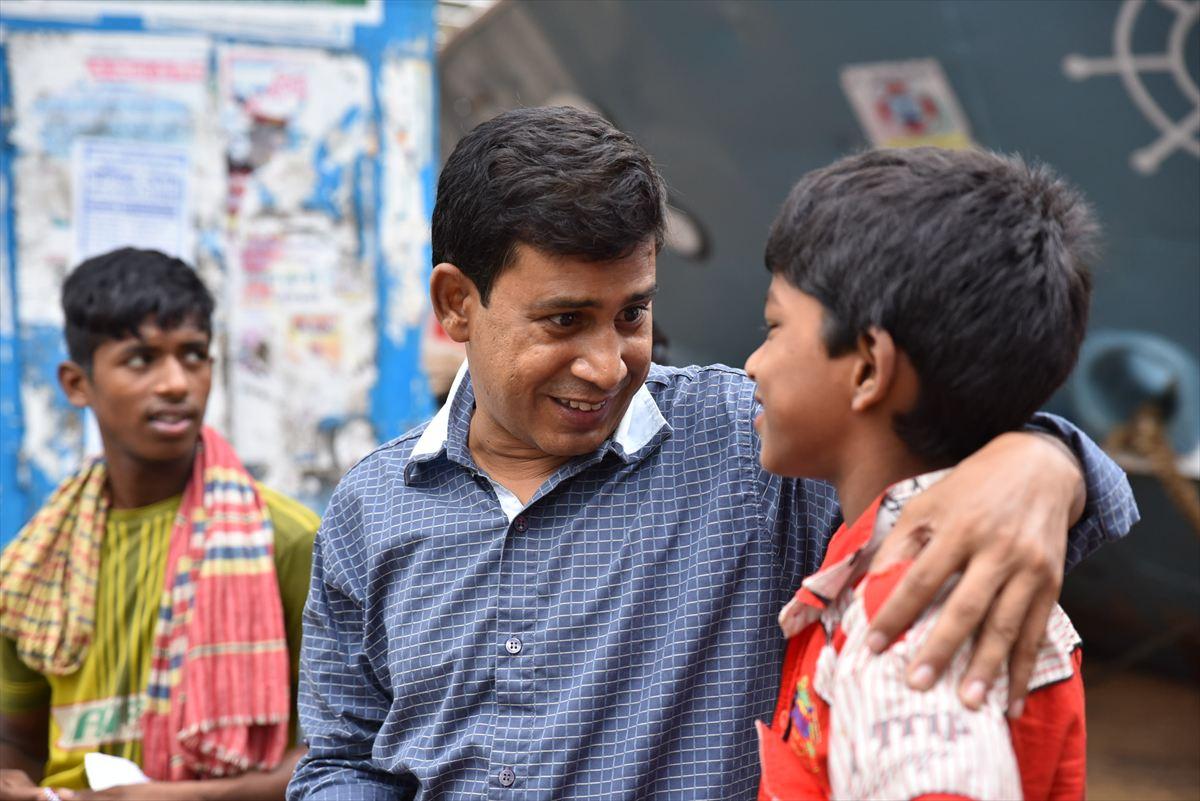
Tarikul listening to one of chidlren at the port (2019)
Patience
Behavioral changes don't happen overnight. Many of the children grow up in unstable environments and may show aggression, use inappropriate language, and struggle to follow rules. Instead of reacting harshly, we give them time. We teach repeatedly, provide continuous counseling, and gently guide them when needed. Being patient, children gradually learn self-control, discipline, and good habits.
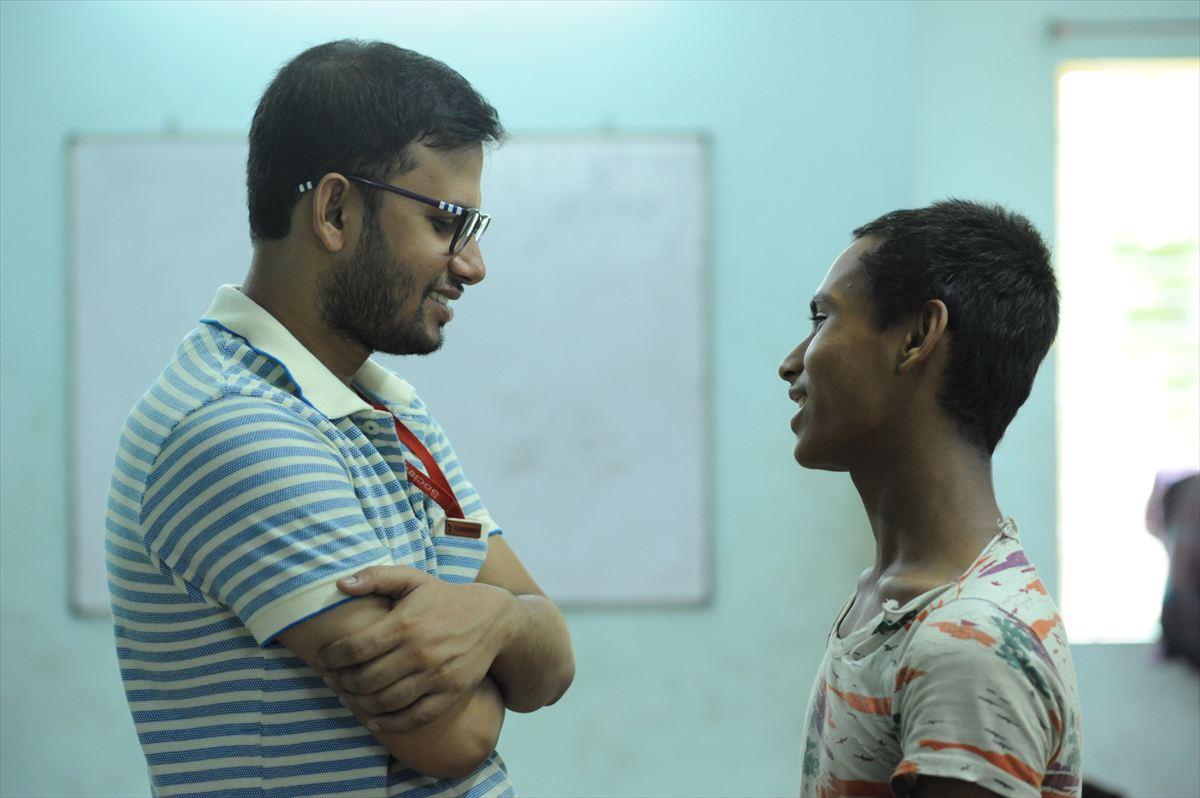
At the center, Chondon (2019) faces a boy and listens to his story.
Respect
Respect is at the core of our approach. We respect each child, regardless of their background, appearance, or past behavior. We listen to their opinions and encourage them to express themselves freely. When they feel respected, they also learn to respect others. This creates a safe and secure environment inside the center.
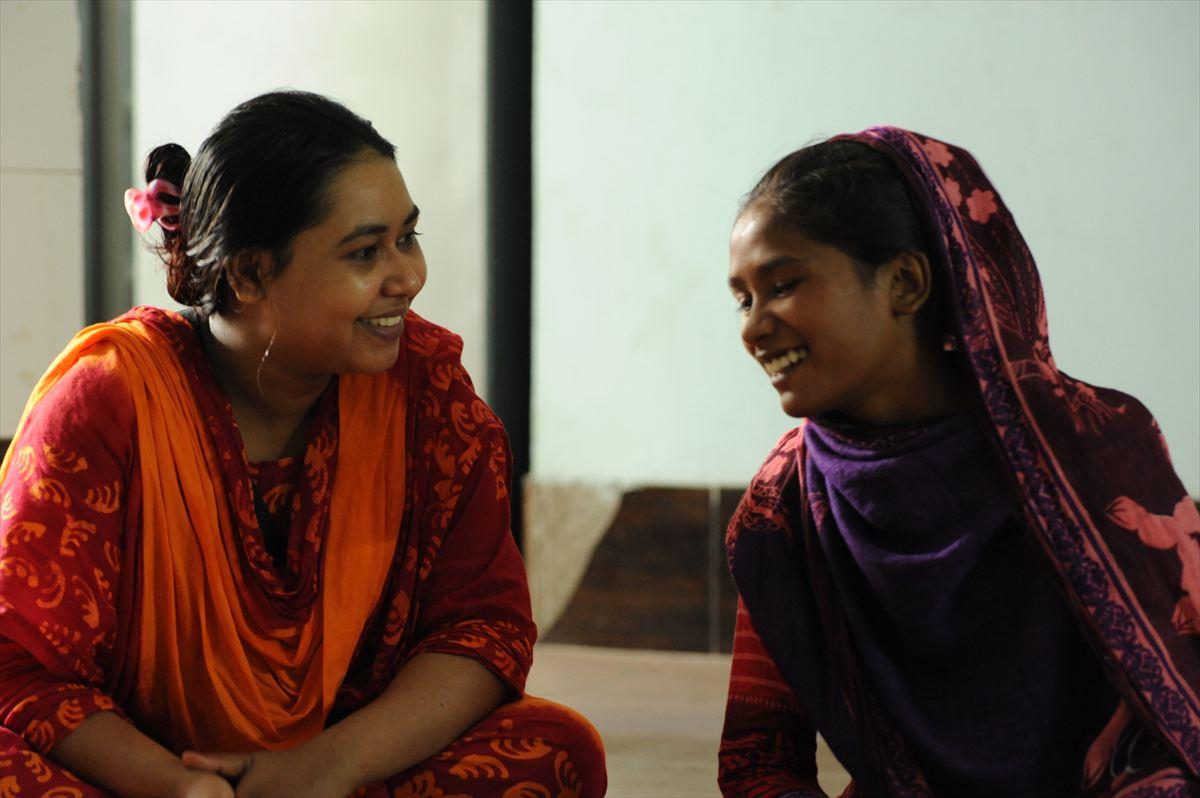
Farzana, the educator, and a girl who, as of 2026, has grown up and started her own family
Non-judgemental Behavior
Many street children are labeled negatively by society. We don’t judge them based on their past actions, family situations, or the work they do. Instead, we focus on their potential and strengths. This helps the chidlren remove shame and fear and actively take part in education, counseling, and awareness activities.
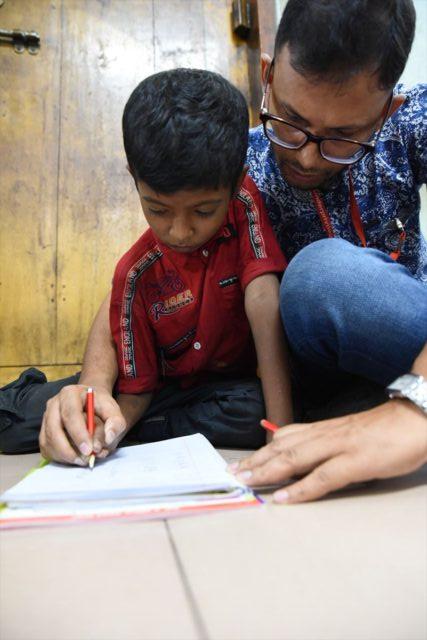
Practice session of Bengali script (2019)
Commitment
A devoted attitude is also an essential factor. Our work requires consistency and dedication. For children who have experienced being abandoned by the adults around them, having stable adults in their lives is crucial. By being present every day, following up on their progress, and providing continuous support, we show that they can rely on us. Through this kind of long-term efforts, we can build deep trust.
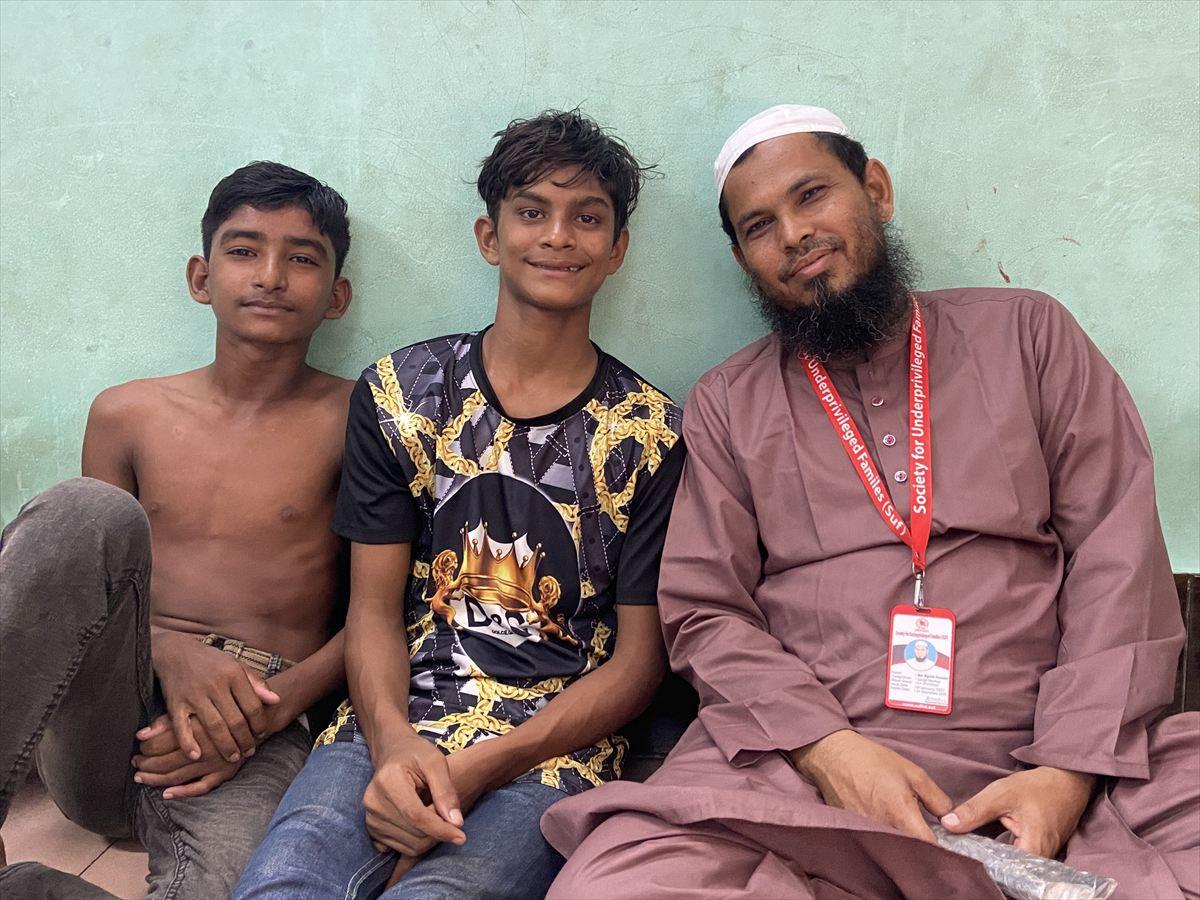
Social worker Biplob is someone on whom the boys can rely (2025)
The "Hohoemi Drop-in Center" will mark its 15th anniversary this September 2026 since its opening. Over these 15 years, most of our staff have stayed on, continuously engaging with children living on the streets. The messages from the children are shared with the staff as well, and they say that they are now able to work with more confidence than before. We believe that the insights and lessons gained from their experiences could also be valuable for supporting children in our own communities. What do you think?
Finally, one thing we admire about the center’s staff is that they remember all the children's names and always call each of them by name. With 40 to 50 children coming and going each day, we can imagine that remembering each name requires a lot of focus and effort. On the other hand, for the children, having their name called warmly and personally is incredibly gratifying and reassuring. It seems to be the first step in rebuilding their trust in adults, as it makes them feel they are being treated equally.
We would be very happy if the experiences of the Center could be helpful when you interact with children in your own life.
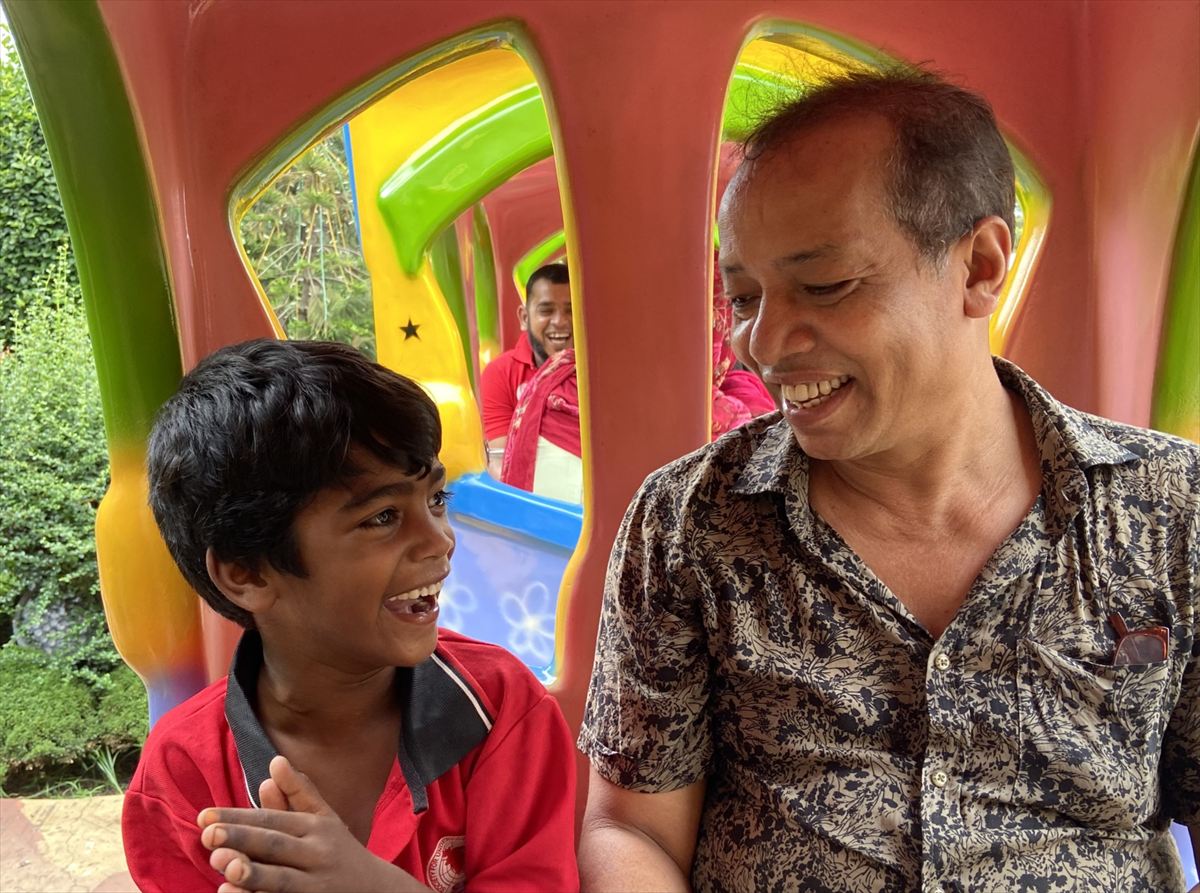
At the amusement park. On the right is Mr. Tip Sultan, representative of KnK's partner organization Society for Underprivileged Families (2025).
KnK is an official charity of the Tokyo Marathon Foundation Charity RUN with HEART.
~Education and Friendship for All Children Beyond Borders~
KnK, Kokkyo naki Kodomotachi (Children without Borders) is an international cooperation NGO established in Japan in 1997. To date, we have provided educational opportunities to over 230,000 children in 15 countries (regions) and supported their independence. As of 2026, we continue to provide educational support in six countries and regions.
While inheriting the philosophy of "Growing Together," we will continue to make every effort to deliver education and friendship to children around the world.
↓↓↓ For more details, please see below:
https://knk.or.jp(Japanese)
https://knk-int.org/(English)
KnK(Children Without Borders) is an official charity of the Tokyo Marathon Foundation Charity RUN with HEART.